
Mastering Wire Forming: How to Design Parts for Efficiency
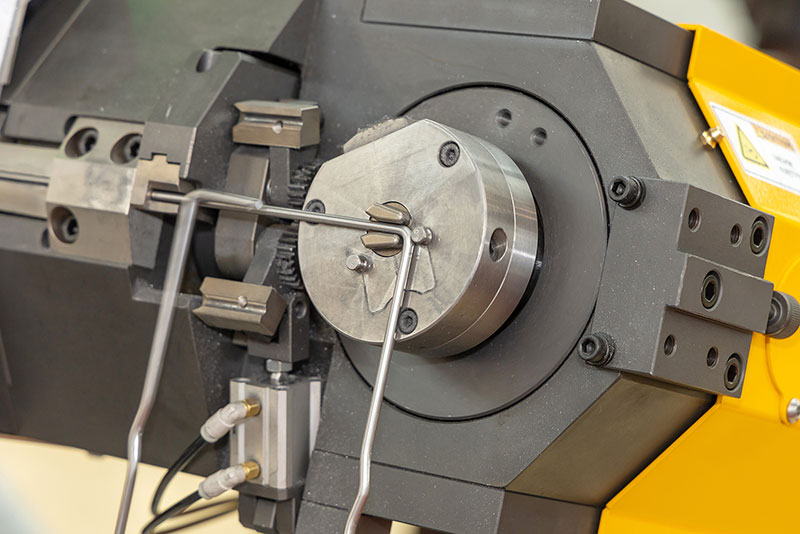
Wire forming is a key process in modern manufacturing for creating strong, lightweight, 3D components. Although CNC wire forming technology is advanced, designing parts without understanding the process can cause production problems, waste, and increased costs. To create functional and economical parts, designers must consider material behavior, geometric limits, and tooling constraints from the start.
Understanding Material Properties
The material you choose dictates how the wire behaves when it encounters a bending tool. Two wires might look identical, but if their tensile strengths or elasticity differ, they will react differently to the same manufacturing forces.
The Springback Effect
The most critical factor in wire forming is “springback.” When you bend a piece of metal, it tends to return partially to its original shape after the bending force is removed. High-tensile materials, like stainless steel or music wire, have significant springback compared to softer materials like copper or mild steel.
Designers must account for this elasticity. If a design requires a perfect 90-degree angle, the manufacturer may need to over-bend the wire to 95 degrees so it settles back to 90. If the material selection isn’t consistent, or if the design doesn’t allow for this over-bending variance, achieving tight tolerances becomes difficult and expensive.
Material Hardness and Formability
Hardness is a double-edged sword. Harder materials offer better durability and wear resistance in the final product, but they are more brittle and prone to cracking during the forming process. Conversely, softer materials form easily but may lack the structural integrity required for load-bearing applications. Understanding the end-use environment is crucial for selecting a material that balances formability with performance.
Design Considerations for Efficient Wire Forming
Once you have selected the appropriate material, the focus shifts to geometry. Certain shapes are naturally easier to form than others. Adhering to specific design guidelines can drastically reduce cycle times and tooling costs.
Optimal Bending Radii
One of the most frequent design errors is specifying an inside bend radius that is too small. As a general rule of thumb, the inside bend radius should be at least equal to the diameter of the wire (1x wire diameter).
Pushing below this ratio causes significant stress on the material. It can lead to cracking on the outer edge of the bend or deformation (flattening) of the wire’s cross-section. Keeping the bend radius generous usually results in a stronger part and reduces wear on the forming tools.
Avoiding Sharp Corners
While sharp, crisp corners might look good in a 3D model, they are impractical in wire forming. Achieving a perfectly sharp internal corner requires immense force and specialized tooling, often coined or stamped rather than bent. This adds steps to the process. Instead, allow for a natural radius. This distributes stress more evenly across the bend, reducing the likelihood of fatigue failure when the part is in use.
Managing Bend Proximity
If two bends are placed too close together, the forming tool physically may not fit between them. CNC wire benders require a certain amount of straight wire between bends to grip and feed the material accurately. If the design demands complex, tight geometry, check with your manufacturer about their specific tooling clearances. Increasing the straight length between bends, even by a few millimeters, can often make the difference between a standard production run and a custom, high-cost setup.
Realistic Tolerances
Tight tolerances drive up costs. In wire forming, variations in raw material batches (even within the same spool) can affect the final output. If your application allows for a tolerance of +/- 0.5mm, do not specify +/- 0.1mm. Over-specifying tolerances forces the manufacturer to slow down production for frequent quality checks and adjustments, which ultimately increases the price per part.
Tooling and Equipment
The machinery used to form wire ranges from manual hand benders to sophisticated CNC (Computer Numerical Control) machines. Understanding the capabilities of this equipment helps in designing compatible parts.
CNC Wire Benders
Modern CNC machines are incredibly versatile. They can rotate the wire and the bending head to create 3D shapes. However, they have limitations regarding the “feed” mechanism. The wire is pulled from a large coil, and before it reaches the bending head, the material often undergoes preparation through wire straightening and cutting services to ensure uniformity.
This preparation phase is vital. If the wire isn’t perfectly straight before entering the bender, the rotational calculations will be off, leading to twisted or out-of-spec parts. Designing parts that are compatible with continuous coil feeding—rather than requiring individual cut lengths to be hand-loaded—will always result in higher efficiency.
Tooling Maintenance and Wear
Every bend wears down the tooling slightly. Harder wire materials accelerate this wear. Designers can mitigate this by avoiding unnecessary complexity. A part with 20 bends will wear out tooling faster and require more machine maintenance than a redesigned version that achieves the same function with only 10 bends. Simplifying the geometry extends tool life and ensures consistent part quality over large production runs.
Conclusion
Efficient wire forming relies on collaboration between designers and manufacturers, considering part function and production mechanics. Selecting the right materials, respecting bend radii, and understanding equipment limitations ensures a smooth transition from concept to production, leading to faster production, lower costs, and better-quality products.